

More Wes Montgomery
More Jazz Recordings Featuring the Guitar
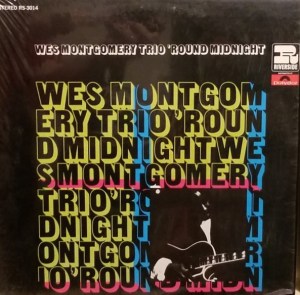

- Boasting INCREDIBLE Shootout Winning Triple Plus (A+++) sound or close to it throughout, this copy is practically as good as we have ever heard
- These sides are rich and full-bodied but clear and spacious – the 1959 All Tube Analog sound is perfect for Wes’s organ trio format
- For some reason, the guitar sound from this era of All Tube Chain Recording seems to have died out with the times – it can only be found on the best of these vintage pressings, such as this one
- 4 stars: “Montgomery’s style, block chords and octaves, is already firmly in place, and he delivers lovely solos on ‘Round Midnight,’ ‘Whisper Not,’ and ‘Satin Doll.’ The choice of material, in fact, from classics like ‘Yesterdays’ to originals like Montgomery’s ‘Jingles,’ never falters.”
This vintage Riverside pressing has the kind of Tubey Magical Midrange that modern records can barely BEGIN to reproduce. Folks, that sound is gone and it sure isn’t showing signs of coming back. If you love hearing INTO a recording, actually being able to “see” the performers, and feeling as if you are sitting in the studio with the band, this is the record for you. It’s what vintage all analog recordings are known for — this sound.
If you exclusively play modern repressings of vintage recordings, I can say without fear of contradiction that you have never heard this kind of sound on vinyl. Old records have it — not often, and certainly not always — but maybe one out of a hundred new records do, and those are some pretty long odds.
What The Best Sides Of The Wes Montgomery Trio aka ‘Round Midnight Have To Offer Is Not Hard To Hear
- The biggest, most immediate staging in the largest acoustic space
- The most Tubey Magic, without which you have almost nothing. CDs give you clean and clear. Only the best vintage vinyl pressings offer the kind of Tubey Magic that was on the tapes in 1959
- Tight, note-like, rich, full-bodied bass, with the correct amount of weight down low
- Natural tonality in the midrange — with all the instruments having the correct timbre
- Transparency and resolution, critical to hearing into the three-dimensional studio space
No doubt there’s more but we hope that should do for now. Playing the record is the only way to hear all of the qualities we discuss above, and playing the best pressings against a pile of other copies under rigorously controlled conditions is the only way to find a pressing that sounds as good as this one does.
Copies with rich lower mids and nice extension up top did the best in our shootout, assuming they weren’t veiled or smeary of course. So many things can go wrong on a record! We know, we’ve heard them all.
Top end extension is critical to the sound of the best copies. Lots of old records (and new ones) have no real top end; consequently, the studio or stage will be missing much of its natural air and space, and instruments will lack their full complement of harmonic information.
Tube smear is common to most vintage pressings. The copies that tend to do the best in a shootout will have the least (or none), yet are full-bodied, tubey and rich.
Size and Space
One of the qualities that we don’t talk about on the site nearly enough is the SIZE of the record’s presentation. Some copies of the album just sound small — they don’t extend all the way to the outside edges of the speakers, and they don’t seem to take up all the space from the floor to the ceiling. In addition, the sound can often be recessed, with a lack of presence and immediacy in the center.
Other copies — my notes for these copies often read “BIG and BOLD” — create a huge soundfield, with the music positively jumping out of the speakers. They’re not brighter, they’re not more aggressive, they’re not hyped-up in any way, they’re just bigger and clearer.
And most of the time those very special pressings are just plain more involving. When you hear a copy that does all that — a copy like this one — it’s an entirely different listening experience.
What We’re Listening For On The Wes Montgomery Trio aka ‘Round Midnight
- Energy for starters. What could be more important than the life of the music?
- The Big Sound comes next — wall to wall, lots of depth, huge space, three-dimensionality, all that sort of thing.
- Then transient information — fast, clear, sharp attacks, not the smear and thickness so common to these LPs.
- Tight, full-bodied bass — which ties in with good transient information, also the issue of frequency extension further down.
- Next: transparency — the quality that allows you to hear deep into the soundfield, showing you the space and air around all the instruments.
- Extend the top and bottom and voila, you have The Real Thing — an honest to goodness Hot Stamper.
Side One
‘Round Midnight
Yesterdays
The End Of A Love Affair
Whisper Not
Ecorah
Side Two
Satin Doll
Missile Blues
Too Late Now
Jingles
AMG 4 Star Review
While even label executive Orrin Keepnews admits that The Wes Montgomery Trio may have fallen short of representing Montgomery’s talent, he still felt that this debut captured a large portion of it. Recorded on October 5 and 6 in 1959, guitarist Montgomery is joined by organist Melvin Rhyne and drummer Paul Parker. Montgomery’s style, block chords and octaves, is already firmly in place, and he delivers lovely solos on “‘Round Midnight,” “Whisper Not,” and “Satin Doll.” The choice of material, in fact, from classics like “Yesterdays” to originals like Montgomery’s “Jingles,” never falters.
The only drawback is that the accompaniment, which though solid, doesn’t seem to perfectly match his guitar style. One gets the impression that Montgomery’s forceful, deliberate style would be better-served by beefier arrangements. Having said this, Montgomery’s performance — coming at the end of a decade represented by guitarists like Tal Farlow and Barney Kessel — must have been a revolution in technique and execution. Suddenly, out of nowhere, a 36-year-old guitarist re-imagines the jazz guitar solo. Although later Riverside recordings of Montgomery are more fully realized, fans will enjoy returning to the moment when he first burst upon the jazz scene.