

More Country and Country Rock
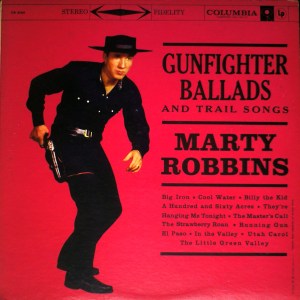

- You’ll find excellent Double Plus (A++) sound on both sides of this 360 Stereo pressing – fairly quiet vinyl too
- This copy is remarkably clear and open, superior to most others in that regard, with smooth and rich vocals to boot
- Transparency and Tubey Magic are critical to the sound of the arrangements, and you will find both in abundance on these sides
- Is the original 6-Eye stereo or early 360 stereo the only way to go on this record? Based upon what we learned in our recent shootout, the first one we’ve done since 2018, the answer is yes
- UPDATE: In our latest shootout (2025) we could not find a single 360 label pressing that earned even 2+ on either side. Although it’s possible better 360s are out there to be found, our advice at this point would be to stick to the 6-Eye originals
- We have two new lists for those who would like to know which Columbia labels win shootouts — one for 6-Eye winners and one for 360 Label winners.
- 4 1/2 stars: “The single most influential album of Western songs in post-World War II American music. The longevity of the album’s appeal is a result of Marty Robbins’ love of the repertory at hand and the mix of his youthful dynamism and prodigious talent…”
Two excellent sides, with the kind of ’50’s Tubey Magical Analog Sound that’s been lost to the world of recorded music for decades — decades, I tell you! Nobody can manage to get a recording to sound like this anymore and it seems clear to us that no one can remaster a recording like this nowadays, if our direct experience with hundreds of such albums counts as evidence.
Albums such as this live and die by the quality of their vocal reproduction. On this record, Mr. Marty Robbins himself will appear to be standing right in your listening room, along with the other other musicians on the sessions of course.
Each of the huge studios the music was recorded in are captured faithfully here. The height, width and depth of the staging are extraordinary. We are not big soundstage guys here at Better Records, but we can’t deny the appeal of the three-dimensional space to be found on a recording as good as this.
This vintage 360 Stereo pressing has the kind of Tubey Magical Midrange that modern records can barely BEGIN to reproduce. Folks, that sound is gone and it sure isn’t showing signs of coming back.
What The Best Sides Of Gunfighter Ballads and Trail Songs Have To Offer Is Not Hard To Hear
- The biggest, most immediate staging in the largest acoustic space
- The most Tubey Magic, without which you have almost nothing. CDs give you clean and clear. Only the best vintage vinyl pressings offer the kind of Tubey Magic that was on the tapes in 1959
- Tight, note-like, rich, full-bodied bass, with the correct amount of weight down low
- Natural tonality in the midrange — with all the instruments having the correct timbre
- Transparency and resolution, critical to hearing into the three-dimensional studio space
No doubt there’s more but we hope that should do for now. Playing the record is the only way to hear all of the qualities we discuss above, and playing the best pressings against a pile of other copies under rigorously controlled conditions is the only way to find a pressing that sounds as good as this one does.
Copies with rich lower mids and nice extension up top did the best in our shootout, assuming they weren’t veiled or smeary of course. So many things can go wrong on a record! We know, we’ve heard them all.
Top end extension is critical to the sound of the best copies. Lots of old records (and new ones) have no real top end; consequently, the studio or stage will be missing much of its natural air and space, and instruments will lack their full complement of harmonic information.
Tube smear is common to most vintage pressings. The copies that tend to do the best in a shootout will have the least (or none), yet are full-bodied, tubey and rich.
Size and Space
One of the qualities that we don’t talk about on the site nearly enough is the SIZE of the record’s presentation. Some copies of the album just sound small — they don’t extend all the way to the outside edges of the speakers, and they don’t seem to take up all the space from the floor to the ceiling. In addition, the sound can often be recessed, with a lack of presence and immediacy in the center.
Other copies — my notes for these copies often read “BIG and BOLD” — create a huge soundfield, with the music positively jumping out of the speakers. They’re not brighter, they’re not more aggressive, they’re not hyped-up in any way, they’re just bigger and clearer.
And most of the time those very special pressings are just plain more involving. When you hear a copy that does all that — a copy like this one — it’s an entirely different listening experience.
What We’re Listening For On Gunfighter Ballads and Trail Songs
- Energy for starters. What could be more important than the life of the music?
- Then: presence and immediacy. The vocals aren’t “back there” somewhere, lost in the mix. They’re front and center where any recording engineer worth his salt would put them.
- The Big Sound comes next — wall to wall, lots of depth, huge space, three-dimensionality, all that sort of thing.
- Then transient information — fast, clear, sharp attacks, not the smear and thickness so common to these LPs.
- Tight punchy bass — which ties in with good transient information, also the issue of frequency extension further down.
- Next: transparency — the quality that allows you to hear deep into the soundfield, showing you the space and air around all the instruments.
- Extend the top and bottom and voila, you have The Real Thing — an honest to goodness Hot Stamper.
Side One
Big Iron Cool Water
Billy the Kid
A Hundred and Sixty Acres
They’re Hanging Me Tonight
The Strawberry Roan
Side Two
El Paso
In the Valley
The Master’s Call
Running Gun
Little Green Valley
Utah Carol
AMG Review
The single most influential album of Western songs in post-World War II American music, Gunfighter Ballads and Trail Songs touched a whole range of unexpected bases in its own time and has endured extraordinarily well across the ensuing four decades.
The longevity of the album’s appeal is a result of Marty Robbins’ love of the repertory at hand and the mix of his youthful dynamism and prodigious talent that he brought to the recordings, and the use of the best music production techniques of the era.
Add to that the presence of a pair of killer original songs that were ready-made singles, “El Paso” and “Big Iron,” and a third, “The Master’s Call,” that was startlingly personal, and the results are well-nigh irresistible.