

More Blood, Sweat and Tears
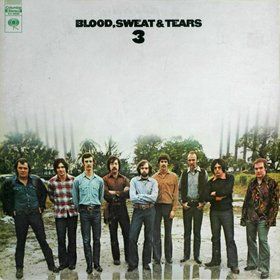

- An excellent copy with solid Double Plus (A++) sound from start to finish
- Here is the big jazz-rock sound we love, stretching from wall to wall and extending from floor ceiling, with energy and power that only a handful of albums can begin to compete with thanks to the engineering prowess of Roy Halee
- This copy shows you just how good Roy Halee‘s engineering used to be, comparable to his brilliant work on BS&T’s previous album, the one we salute to this day as (probably) the best sounding rock record ever made
- “David Clayton-Thomas remained an enthusiastic blues shouter, and the band still managed to put together lively arrangements, especially on the Top 40 hits ‘Hi-De-Ho’ and ‘Lucretia Mac Evil’… BS&T 3 was another chart-topping gold hit.”
- This is an excellent title from 1970, which just happens to be a great year for Rock and Pop Music, maybe the greatest of them all
On the best copies, the brass is rich, solid, and present, with correct timbre for every instrument from the bass trombone all the way up the scale to piccolo trumpet — exactly the sound we were looking for and struggle to find.
The right pressing is BIG down low. The vocals are clear and present. The huge 30+ member chorus on the first track works; it doesn’t most of the time. It obviously presents a real challenge to any engineer, but Halee is up to it, judging solely by the sound on this very copy. Mastering and pressing issues end up making that chorus sound small, thin and opaque most of the time.
“Lucretia MacEvil,” a minor hit, has more compression than the rest of the side, to make it more radio-friendly of course, but here it holds up much better than on most copies.
What The Best Sides Of Blood, Sweat & Tears 3 Have To Offer Is Not Hard To Hear
- The biggest, most immediate staging in the largest acoustic space
- The most Tubey Magic, without which you have almost nothing. CDs give you clean and clear. Only the best vintage vinyl pressings offer the kind of Tubey Magic that was on the tapes in 1970
- Tight, note-like, rich, full-bodied bass, with the correct amount of weight down low
- Natural tonality in the midrange — with all the instruments having the correct timbre
- Transparency and resolution, critical to hearing into the three-dimensional studio space
No doubt there’s more but we hope that should do for now. Playing the record is the only way to hear all of the qualities we discuss above, and playing the best pressings against a pile of other copies under rigorously controlled conditions is the only way to find a pressing that sounds as good as this one does.
What We’re Listening For On Blood, Sweat & Tears 3
- Energy for starters. What could be more important than the life of the music?
- Then: presence and immediacy. The vocals aren’t “back there” somewhere, lost in the mix. They’re front and center where any recording engineer worth his salt — Roy Halee in this case — would put them.
- The Big Sound comes next — wall to wall, lots of depth, huge space, three-dimensionality, all that sort of thing.
- Then transient information — fast, clear, sharp attacks, not the smear and thickness so common to these LPs.
- Tight punchy bass — which ties in with good transient information, also the issue of frequency extension further down.
- Next: transparency — the quality that allows you to hear deep into the soundfield, showing you the space and air around all the instruments.
- Extend the top and bottom and voila, you have The Real Thing — an honest to goodness Hot Stamper.
Vinyl Condition
Mint Minus Minus and maybe a bit better is about as quiet as any vintage pressing will play, and since only the right vintage pressings have any hope of sounding good on this album, that will most often be the playing condition of the copies we sell. (The copies that are even a bit noisier get listed on the site are seriously reduced prices or traded back in to the local record stores we shop at.)
Those of you looking for quiet vinyl will have to settle for the sound of other pressings and Heavy Vinyl reissues, purchased elsewhere of course as we have no interest in selling records that don’t have the vintage analog magic of these wonderful recordings.
If you want to make the trade-off between bad sound and quiet surfaces with whatever Heavy Vinyl pressing might be available, well, that’s certainly your prerogative, but we can’t imagine losing what’s good about this music — the size, the energy, the presence, the clarity, the weight — just to hear it with less background noise.
TRACK LISTING
Side One
Hi-De-Ho
The Battle
Lucretia Mac Evil
Lucretia’s Reprise
Fire and Rain
Lonesome Suzie
Side Two
Symphony for the Devil / Sympathy for the Devil
i. Emergence (a. Fanfare)
ii. Devil’s Game (a. Labyrinth / b. Satan’s Dance / c. The Demand)
iii. Submergence (a. Contemplation / b. Return)
He’s a Runner
Somethin’ Comin’ On
40,000 Headman
AMG Review
Blood, Sweat & Tears had a hard act to follow in recording their third album. Nevertheless, BS&T constructed a convincing, if not quite as impressive, companion to their previous hit. David Clayton-Thomas remained an enthusiastic blues shouter, and the band still managed to put together lively arrangements, especially on the Top 40 hits “Hi-De-Ho” and “Lucretia Mac Evil.” Elsewhere, they re-created the previous album’s jazzing up of Laura Nyro (“He’s a Runner”) and Traffic (“40,000 Headmen”), although their pretentiousness, on the extended “Symphony/Sympathy for the Devil,” and their tendency to borrow other artists’ better-known material (James Taylor’s “Fire and Rain”) rather than generating more of their own, were warning signs for the future. In the meantime, BS&T 3 was another chart-topping gold hit.