

More of The Clash
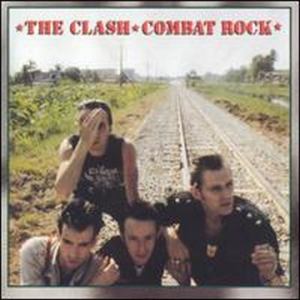

- Both the two big jammers are on this killer side one: Should I Stay or Should I Go and Rock the Casbah – you’ve never heard them sound like this!
- Glyn Johns produced and mixed Combat Rock, so its sonic credentials are certainly in order
- If you’re a fan of meaty bass, grungy guitars and punchy drums, this is the copy for you
- …its finest moments — “Should I Stay or Should I Go,” “Rock the Casbah,” “Straight to Hell” — illustrate why the Clash were able to reach a larger audience than ever before with the record.”
Full and natural, energetic and high-res, no other copy came close. A stunning copy, absolutely as good as it gets for this punk classic.
Most of the other copies we played failed in one of two ways: if they weren’t too bright, they were dead as a doornail. But this copy knocked them all out with correct tonal balance and tons of energy.
What the Best Sides of Combat Rock Have to Offer Is Not Hard to Hear
- The biggest, most immediate staging in the largest acoustic space
- The most Tubey Magic, without which you have almost nothing. CDs give you clean and clear. Only the best vintage vinyl pressings offer the kind of Tubey Magic that was on the tapes as late as in 1982
- Tight, note-like, rich, full-bodied bass, with the correct amount of weight down low
- Natural tonality in the midrange — with all the instruments having the correct timbre
- Transparency and resolution, critical to hearing into the three-dimensional studio space
No doubt there’s more but we hope that should do for now. Playing the record is the only way to hear all of the qualities we discuss above, and playing the best pressings against a pile of other copies under rigorously controlled conditions is the only way to find a pressing that sounds as good as this one does.
This vintage Epic pressing has the kind of Tubey Magical Midrange that modern records can barely BEGIN to reproduce. Folks, that sound is gone and it sure isn’t showing signs of coming back. If you love hearing INTO a recording, actually being able to “see” the performers, and feeling as if you are sitting in the studio with the band, this is the record for you. It’s what vintage all analog recordings are known for — this sound.
If you exclusively play modern repressings of vintage recordings, I can say without fear of contradiction that you have never heard this kind of sound on vinyl. Old records have it — not often, and certainly not always — but maybe one out of a hundred new records do, and those are some pretty long odds.
What We Listen For on Combat Rock
- Energy for starters. What could be more important than the life of the music?
- Then: presence and immediacy. The vocals aren’t “back there” somewhere, lost in the mix. They’re front and center where any recording engineer worth his salt would put them.
- The Big Sound comes next — wall to wall, lots of depth, huge space, three-dimensionality, all that sort of thing.
- Then transient information — fast, clear, sharp attacks, not the smear and thickness so common to these LPs.
- Tight punchy bass — which ties in with good transient information, also the issue of frequency extension further down.
- Next: transparency — the quality that allows you to hear deep into the soundfield, showing you the space and air around all the instruments.
- Extend the top and bottom and voila, you have The Real Thing — an honest to goodness Hot Stamper.
Vinyl Condition
Mint Minus Minus and maybe a bit better is about as quiet as any vintage pressing will play, and since only the right vintage pressings have any hope of sounding good on this album, that will most often be the playing condition of the copies we sell. (The copies that are even a bit noisier get listed on the site are seriously reduced prices or traded back in to the local record stores we shop at.)
Those of you looking for quiet vinyl will have to settle for the sound of later pressings and Heavy Vinyl reissues, purchased elsewhere of course as we have no interest in selling records that don’t have the vintage analog magic of these wonderful originals.
If you want to make the trade-off between bad sound and quiet surfaces with whatever Heavy Vinyl pressing might be available, well, that’s certainly your prerogative, but we can’t imagine losing what’s good about this music — the size, the energy, the presence, the clarity, the weight — just to hear it with less background noise.
TRACK LISTING
Side One
Know Your Rights
Car Jamming
Should I Stay or Should I Go
Rock the Casbah
Red Angel Dragnet
Straight to Hell
Side Two
Overpowered by Funk
Atom Tan
Sean Flynn
Ghetto Defendant
Inoculated City
Death Is a Star
AMG Review
On the surface of things, Combat Rock appears to be a retreat from the sprawling stylistic explorations of London Calling and Sandinista! The pounding arena rock of “Should I Stay or Should I Go” makes the Clash sound like an arena rock band, and much of the album boasts a muscular, heavy sound courtesy of producer Glyn Johns. But things aren’t quite that simple. Combat Rock contains heavy flirtations with rap, funk, and reggae, and it even has a cameo by poet Allen Ginsberg — if this album is, as it has often been claimed, the Clash’s sellout effort, it’s a very strange way to sell out.
Even with the infectious, dance-inflected new wave pop of “Rock the Casbah” leading the way, there aren’t many overt attempts at crossover success, mainly because the group is tearing in two separate directions. Mick Jones wants the Clash to inherit the Who’s righteous arena rock stance, and Joe Strummer wants to forge ahead into black music … its finest moments — “Should I Stay or Should I Go,” “Rock the Casbah,” “Straight to Hell” — illustrate why the Clash were able to reach a larger audience than ever before with the record.