More Classical and Orchestral Recordings

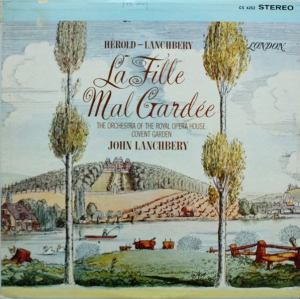
- This early London pressing (only the second copy to ever hit the site) of Lanchbery’s sparkling orchestral arrangement of Herold’s 1828 score boasts incredible Nearly Triple Plus (A++ to A+++) grades from start to finish – just shy of our Shootout Winner
- It’s also remarkably quiet at the high end of Mint Minus Minus, a grade that even our most well-cared-for vintage classical titles have trouble playing at
- So transparent, dynamic and real, this copy raises the bar for the sound of ballet music on vinyl
- A record like this lets you get lost in the world of its music, and what could be more important in a recording than that?
The best sounding quiet copy we have ever heard!
If you are looking for quiet vinyl, you will have a hard time finding it on this title.
This vintage London pressing has the kind of Tubey Magical Midrange that modern records can barely BEGIN to reproduce. Folks, that sound is gone and it sure isn’t showing signs of coming back. If you love hearing INTO a recording, actually being able to “see” the performers, and feeling as if you are sitting in the studio with the band, this is the record for you. It’s what vintage all analog recordings are known for — this sound.
If you exclusively play modern repressings of vintage recordings, I can say without fear of contradiction that you have never heard this kind of sound on vinyl. Old records have it — not often, and certainly not always — but maybe one out of a hundred new records do, and those are some pretty long odds.
What The Best Sides Of La Fille Mal Gardee (Excerpts) Have To Offer Is Not Hard To Hear
- The biggest, most immediate staging in the largest acoustic space
- The most Tubey Magic, without which you have almost nothing. CDs give you clean and clear. Only the best vintage vinyl pressings offer the kind of Tubey Magic that was on the tapes in 1962
- Tight, note-like, rich, full-bodied bass, with the correct amount of weight down low
- Natural tonality in the midrange — with all the instruments having the correct timbre
- Transparency and resolution, critical to hearing into the three-dimensional studio space
No doubt there’s more but we hope that should do for now. Playing the record is the only way to hear all of the qualities we discuss above, and playing the best pressings against a pile of other copies under rigorously controlled conditions is the only way to find a pressing that sounds as good as this one does.
Copies with rich lower mids and nice extension up top did the best in our shootout, assuming they weren’t veiled or smeary of course. So many things can go wrong on a record. We know, we’ve heard them all.
Top end extension is critical to the sound of the best copies. Lots of old records (and new ones) have no real top end; consequently, the studio or stage will be missing much of its natural air and space, and instruments will lack their full complement of harmonic information.
Tube smear is common to most vintage pressings. The copies that tend to do the best in a shootout will have the least (or none), yet are full-bodied, tubey and rich.
Standard Operating Procedures
What are sonic qualities by which a record — any record — should be judged? Pretty much the ones we discuss in most of our Hot Stamper listings: energy, frequency extension (on both ends), transparency, spaciousness, harmonic textures (freedom from smear is key), rhythmic drive, tonal correctness, fullness, richness, three-dimensionality, and on and on down the list.
When we can get a number of these qualities to come together on the side we’re playing, we provisionally give it a ballpark Hot Stamper grade, a grade that is often revised during the shootout as we hear what the other copies are doing, both good and bad.
Once we’ve been through all the side ones, we play the best of the best against each other and arrive at a winner for that side. Other copies from earlier in the shootout will frequently have their grades raised or lowered based on how they sounded compared to the eventual shootout winner. If we’re not sure about any pressing, perhaps because we played it early on in the shootout before we had learned what to listen for, we take the time to play it again.
Repeat the process for side two and the shootout is officially over. All that’s left is to see how the sides of each pressing match up.
It may not be rocket science, but it’s a science of a kind, one with strict protocols that we’ve developed over the course of many years to insure that the results we arrive at are as accurate as we can make them.
The result of all our work speaks for itself, on this very record in fact. We guarantee you have never heard this music sound better than it does on our Hot Stamper pressing — or your money back.
What We’re Listening For On La Fille Mal Gardee (Excerpts)
- Energy for starters. What could be more important than the life of the music?
- The Big Sound comes next — wall to wall, lots of depth, huge space, three-dimensionality, all that sort of thing.
- Then transient information — fast, clear, sharp attacks, not the smear and thickness so common to these LPs.
- Powerful bass — which ties in with good transient information, also the issue of frequency extension further down.
- Next: transparency — the quality that allows you to hear deep into the soundfield, showing you the space and air around all the instruments.
- Extend the top and bottom and voila, you have The Real Thing — an honest to goodness Hot Stamper.
TRACK LISTING
Side One
Introduction, Dance Of The Cock And Hens, Lise And Ribbon
Thomas And Alain
Picnic, Flute Dance, Quarrel, The Fanny Ellsler Pas-De-Deux
Side Two
Simone, Clog Dance, Maypole Dance, Storm And Finale (Act 1)
Spinning, Tambourine Dance (Aria Con Variazoni), Harvesters
Thomas, Alain And The Notaries
Pas-De-Deux, Finale
Ferdinand Hérold Mini-Bio
Louis Joseph Ferdinand Herold (28 January 1791 – 19 January 1833), better known as Ferdinand Hérold, was a French composer. He was celebrated in his lifetime for his operas, of which he composed more than twenty, but he also wrote ballet music, works for piano and choral pieces. He is best known today for the ballet La Fille mal gardée and the overture to the opera Zampa.
Born in Paris to a musical family, Hérold trained at the Paris Conservatoire and won France’s premier musical prize, the Prix de Rome in 1812. After a time in Italy he returned to Paris and worked first at the Théâtre Italien and then at the Opéra. He wrote several ballets for the latter, but was best known as a composer of opéra comique. Some of them, particularly in his early days, were hampered by poor librettos, but later he had more successes than failures, and his last two operas, Zampa (1831) and Le Pré aux clercs (The Clerk’s Meadow, 1832) were immensely popular, and remained in the repertory in France and elsewhere for decades after his early death from tuberculosis in 1833.
As a ballet composer Hérold was a pioneer, raising the standard of ballet scores from being simple arrangements of popular tunes to well-orchestrated music illustrating the action of the ballets. His operas influenced later composers from Bizet and Offenbach to Wagner and Smetana.
– Wikipedia
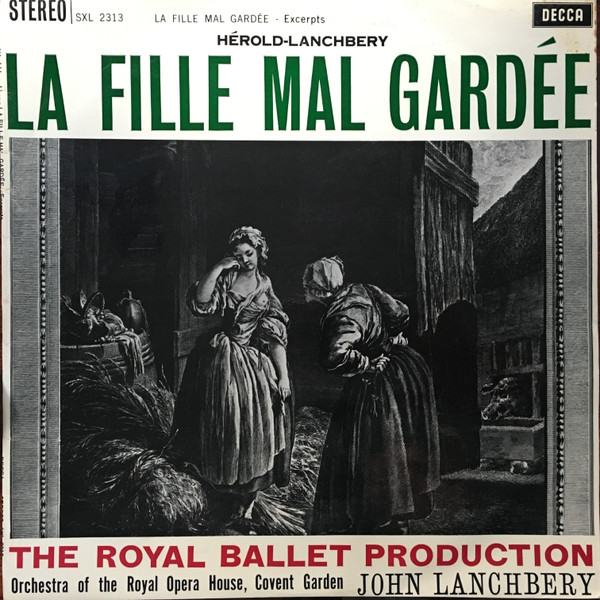
The Decca release of the recording can be seen below.