
More on the Pitfalls of Conventional Thinking
It’s amazing how many records that used to sound bad — or least problematic — now sound pretty darn good.
Every one of them is proof that judgments about the sound quality of recordings are of limited value.
The recordings don’t change. Our ability — and yours — to find, clean and play the pressings made from them does, and that’s what Hot Stampers are all about.
You have a choice. You can choose to take the standard audiophile approach, which is to buy the record that is supposed to be the best pressing, check off the box for that title, file it alphabetically on the shelf where it goes and sleep soundly knowing that all is now right with the world, or at least that title.
You did the right thing, you bought the pressing you were told to buy, the one you read the reviews about, the one on the list, the one they said was made from the real analog tape, mastered by one of the greats, the one pressed on the best vinyl, in a limited run, and on and on down the list.
We did it too, more times than I care to admit.
Instead of heading toward that dead end, perhaps you should consider adopting our approach, an approach that allows you to hear those very same albums sound dramatically better than you ever thought possible. In fact, many of our customers have written to tell us what a revelation our Hot Stamper pressings of albums they were familiar with turned out to be.
Added Benefits
Our approach has the added benefit of freeing up time that might otherwise be spent bitching about the unfortunate sound of so many great albums.
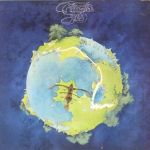
Fragile is apparently not a good recording. Songs in the Key of Life is also apparently not a good recording.
Who knew we could find such amazing sounding pressings made from such poorly recorded music?
This in turn makes more time available for pleasurable listening to the Hot Stamper pressing you discovered on your own or the one we found for you. It’s the same process whether you do it yourself or we do it for you.
And why should anyone take you at your word? They have never heard your copy. It would take a leap of faith on their part to believe that your copy sounds so much better than the one they own, when the one they own looks just like the one you own. It might even have the same catalog number, the same label, maybe even the same stampers.
But this is precisely what Hot Stampers are all about. Pressings often look the same but they most assuredly do not often sound the same.
We Can Only Do So Much
Unfortunately most of what is important in audio you have to learn to do for yourself.
We can find you the best sounding pressings; that’s the easy part. Figuring out how to play them, and learning how to listen to them, well, that’s a fair bit harder. That part takes a lifetime, at least.
This hobby is supposed to be fun. If you’ve been in it for any length of time you know that sometimes it is and sometimes it isn’t. But if you enjoy doing it at least some of the time, and you devote the proper resources to it — time and money — you will no doubt derive much more pleasure from it, especially if you use our approach.
It has worked for us and it can work for you.
This is what the revolutionary changes in audio link explains. If you haven’t taken advantage of all the newest technologies that make LP playback dramatically better than it was ten or twenty years ago, CCR’s records most likely won’t sound the way you want them to.
Trust me, there’s a world of sound lurking in the grooves of the best “badly recorded” albums that simply cannot be revealed without Walker cleaning fluids, the Talisman, Hallographs, vibration-reducing platforms, top quality front ends, big speakers pulled well out from the back wall in a treated room, and all the rest.
Our playback system is designed to play records with all the size, weight, energy and power of live music.
We live for this kind of sound here at Better Records. We’re prepared to do whatever it takes to play records like this with the maximum fidelity we can achieve, secure in the knowledge that a system that can play “badly recorded” albums and have them sound right is one that can play practically any record.