
In order to do the work we do, our approach to audio has to be fundamentally different from that of the audiophile who listens mostly for enjoyment.
Critical listening and listening for enjoyment go hand in hand, but they are not the same thing.
The first of these — developing and applying your critical listening skills — allows you to achieve good audio and find the best pressings of the music you love.
(Developing critical thinking skills when it comes to records and equipment is important too but that is not the focus of today’s commentary.)
Once you have a good stereo and a good record to play on it, your enjoyment of recorded music should increase dramatically. A great sounding record on a killer system is a thrill.
A Heavy Vinyl mediocrity, played back on what passes for so many audiophile systems these days — regardless of cost — is, to these ears, an insufferable bore. (And, judging by what we’ve played in 2024 and 2025, these remastered releases are sounding as bad as they ever have.)
If this sounds arrogant and elitist, so be it. Heavy Vinyl records are fine for some people, but for the last twenty or so years we’ve managed to set a higher standard for ourselves and our customers. Holding our records to that higher standard allows us to price our Hot Stamper pressings commensurate with their superior sound and please the hell out of the people who buy them.
For those who appreciate the difference, and have resources sufficient to afford them, the cost is reasonable. If it were not, we would have gone out of business long ago.
Hot Stampers are not cheap. If the price could not be justified by the better sound quality and quieter surfaces, who in his right mind would buy them? We can’t really be fooling that many audiophiles, can we?
We talked about our approach to audio in a commentary we wrote decades ago:
We have put literally thousands of hours into our system and room in order to extract the maximum amount of information, musical and otherwise, from the records we play, or as close to the maximum as we can manage. Ours is as big and open as any system in an 18 by 20 by 8 room I’ve ever heard.
UPDATE 2023
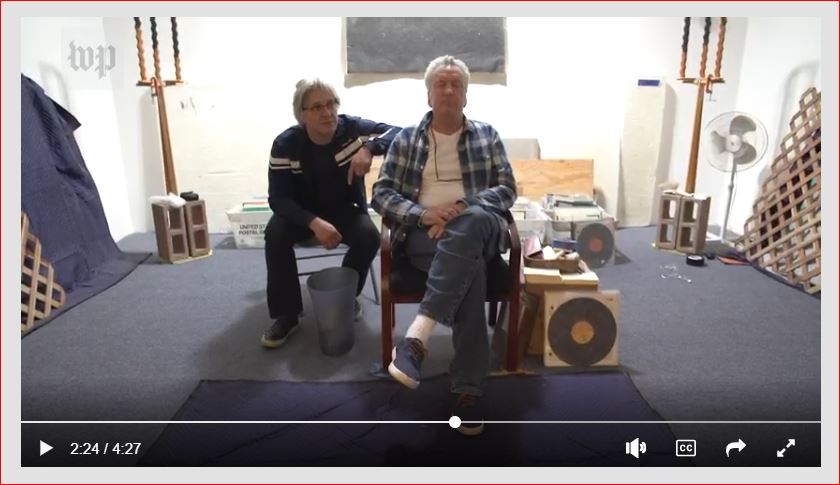
We now have a custom-built studio with a twelve foot high ceiling, which, as you might imagine, does wonders for the size and scope of the recordings we play.
It’s also as free from colorations of any kind as we can possibly make it. We want to hear the record in its naked form; not the way we want it to sound, but the way it actually does sound. That way, when you get it home and play it yourself, it should sound very much like we described it.
If too much of the sound we hear is what our stereo is doing, not what the record is doing, how can we know what it will sound like on your system? We try to be as truthful and as critical as we can when describing the records we sell. Too much coloration in the system makes those tasks much more difficult, if not a practical impossibility.
A White Hot copy should have a near-perfect blend of Tubey Magic and clarity, because that’s what we hear when we play it on our system.
We are convinced that the more time and energy you’ve put into your stereo over the years, decades even, the more likely it is that you will hear this wonderful record sound the way we heard it. And that will make it one helluva Demo Disc in your home too.
Audio Progress Is Key to Understanding and Appreciating Hot Stampers
Making progress in audio is not easy — in fact, if our experience is any guide, nothing is harder.
However, if your approach to audio is clear-headed and evidence-based — in other words, scientific — progress is not only possible, it is virtually guaranteed.
Most of the listings linked here describe lessons we’ve learned from playing so many records over the years. If you play lots of records, while listening to them critically, some of them will teach you things about audio that you cannot learn any other way.
Practically all of our audio philosophy derives from the simple act of trying to get our system to play the greatest recordings of all time with the highest fidelity possible. Every record is a challenge, and every defeat an opportunity to learn something, to see where we may have gone wrong, in order to know more than we did before.
The right vintage pressings have the potential to sound dramatically better than the mostly-mediocre records being made today. If you have made good audio progress in this hobby, this is an obvious truism.
If you doubt any of the above, we hope that the work you take on based on the advice in these commentaries will help get your system to another level, a level where there can be no doubt.
Further Reading
- Some record collecting don’ts
- The law of large numbers can help you find better records
- Basic audio advice — these are the fundamentals of good sound