
A GUIDE FOR THE DEDICATED ANALOG AUDIOPHILE
Bill, who also happens to be a very good customer of ours, recently had Robert Brook over for a visit to help him tweak and tune his setup.
The changes Robert was able to make to Bill’s system took it to the next level, or maybe even the one that comes after that. There are a lot of levels in audio!
As Bill said, even with a $6k phono stage and other comparably expensive equipment, the sound was still just OK.
Tedious, painstaking setup is the only thing that can make all that fancy equipment sound good, and Robert was the man with the patience to help out a friend who needed some guidance.
The magazines and the websites don’t talk much about these things, but we here at Better Records know that high fidelity sound is simply not possible without learning how to do the work and sweating all the details.
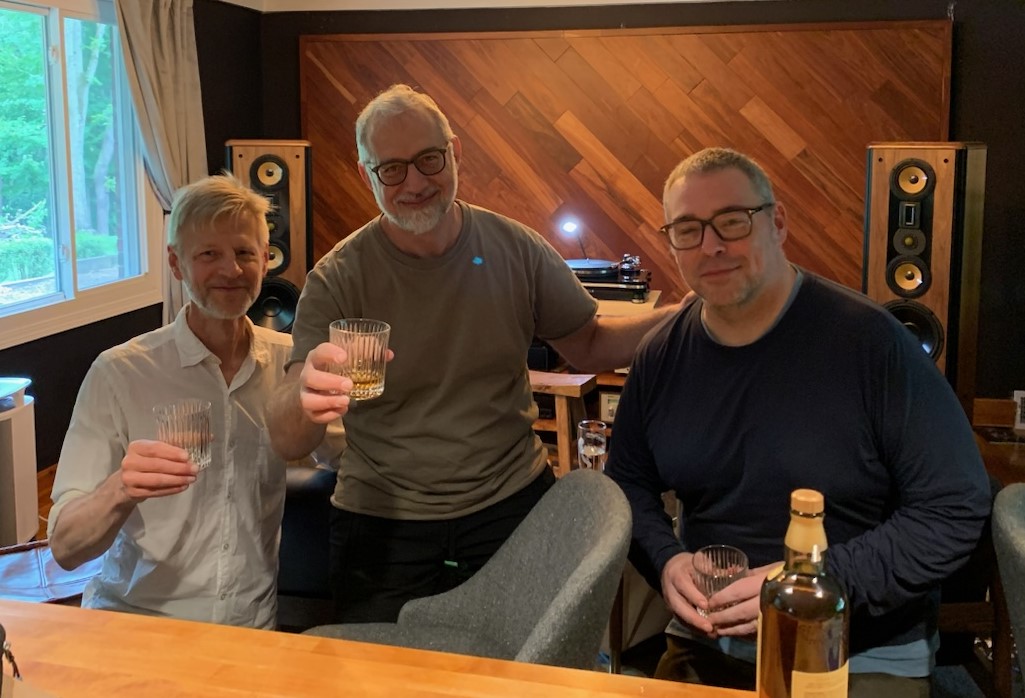
I only know of three people who followed my audio advice: Robert, Bill and Aaron, all of whom can be seen in the picture below.
For years I’ve been banging on about Legacy speakers, low-power transistor integrated amps, EAR 324p phono stages, Triplanar tonearms, 17dx cartridges, VPI turntables, Super Platters and motor controllers, Townshend Seismic Platforms, Hallographs, suspended cables, clean electricity, and the kind of tuning and tweaking that can take your system beyond where you thought it could go.
Even buying all this stuff used, the resulting system would still end up being a few tens of thousands of dollars. That said, I honestly don’t think you can achieve this level of sound with standard audiophile equipment, the kind you might see in a showroom or advertised on websites, at any price*.
The basis of my advice was that I had painstakingly worked on my system for more than twenty years, with price practically no object. My system eventually ended up composed of those elements. Along the way I made sure that at every stage the components complimented each other in order to achieve more accurate, more realistic and more powerful sound.
Rather than reinvent the wheel, doesn’t it make more sense to just copy one? Especially if the guy who owns that wheel sells pressings that he says are amazing, and when you play them at home, they actually sound the way he described them?
These three gentleman took my advice and they now seem to be enjoying the hell out of the higher quality sound they achieved, so much that they actually took the time to raise a glass to me.
“To Tom Port, if it weren’t for him, we wouldn’t be here right now.”

I replied:
What a wonderful thing to say. I am honored to have been of help to those who truly prize top quality analog sound!
Thanks so much.
TP
PS
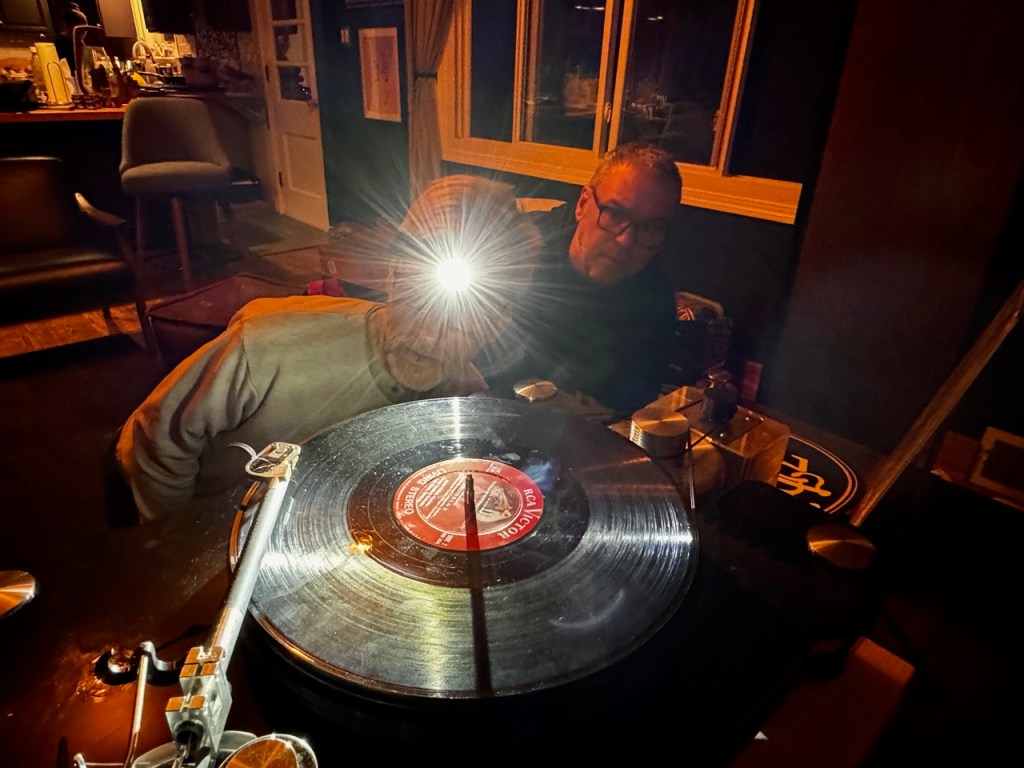
The copy of Bob and Ray you see by the turntable was purchased by Bill back in May. He had written us about the album:
I recently got the EAR324 and the Dynavector cartridge. I want to get a good test record to push the system. I understand Bob and Ray Throw A Stereo Spectacular is the record to use.
Bill,
Absolutely. Bob and Ray really changed everything for me. I would be lost without that record.
I write a lot about the Volga Boatmen. One key, among many, is that the EAR and the 17dx add no coloration to the sound, so you want to keep the Tubey Magic that is on the tape, not lose it, while making sure everything else just gets bigger, clearer and more exciting.
That’s the long and the short of it. Enjoy!
TP
*Audiophiles who talk about how awesome their expensive equipment is and then in the very next sentence rave about some Heavy Vinyl mediocrity make it clear, at least to some of us, just how much credibility they are owed.
As crazy as it sounds, this kind of group is not limited to audiophiles who post on forums and write reviews on Discogs. Many of these rather conventional audiophile types — this guy is a good example — actually do this kind of work for a living.
How they get away with it is a still a mystery to me.
Further Reading
- Getting serious about audio
- Basic audio advice — these are the fundamentals of good sound
- Tuning and tweaking are essential to improving your critical listening skills