

More Randy Newman
More Singer-Songwriter Albums
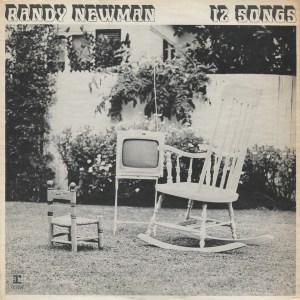

- With two nearly Triple Plus (A++ to A+++) sides, this copy of what some consider Randy Newman’s strongest album is close to the BEST we have ever heard, right up there with our Shootout Winner – relatively quiet vinyl too
- An excellent pressing, with a very strong bottom end, lovely richness and warmth, real space and separation between the instruments and wonderful immediacy throughout
- The clarity of the piano and guitar perfectly support and complement Randy’s heartfelt vocals
- 5 stars: “While much of Randy Newman [his first album] was heavily orchestrated, 12 Songs was cut with a small combo (Ry Cooder and Clarence White take turns on guitar), leaving a lot more room for Newman’s Fats Domino-gone-cynical piano and the bluesier side of his vocal style, and Randy sounds far more confident and comfortable in this context.”
This vintage Reprise pressing has the kind of Tubey Magical Midrange that modern records can barely BEGIN to reproduce. Folks, that sound is gone and it sure isn’t showing signs of coming back. If you love hearing INTO a recording, actually being able to “see” the performers, and feeling as if you are sitting in the studio with the band, this is the record for you. It’s what vintage all analog recordings are known for — this sound.
If you exclusively play modern repressings of vintage recordings, I can say without fear of contradiction that you have never heard this kind of sound on vinyl. Old records have it — not often, and certainly not always — but maybe one out of a hundred new records do, and those are some pretty long odds.
What The Best Sides Of Randy Newman’s Debut Have To Offer Is Not Hard To Hear
- The biggest, most immediate staging in the largest acoustic space
- The most Tubey Magic, without which you have almost nothing. CDs give you clean and clear. Only the best vintage vinyl pressings offer the kind of Tubey Magic that was on the tapes in 1970
- Tight, note-like, rich, full-bodied bass, with the correct amount of weight down low
- Natural tonality in the midrange — with all the instruments having the correct timbre
- Transparency and resolution, critical to hearing into the three-dimensional studio space
No doubt there’s more but we hope that should do for now. Playing the record is the only way to hear all of the qualities we discuss above, and playing the best pressings against a pile of other copies under rigorously controlled conditions is the only way to find a pressing that sounds as good as this one does.
Engineering Excellence
One of the top guys at Warners, Lee Herschberg recorded and mixed this album (along with Bruce Botnick, Donn Landee et al.) as well as a number of others by Randy Newman. You’ll also find his name in the credits for many of the best releases by the Ry Cooder, The Doobie Brothers, Gordon Lightfoot and Frank Sinatra, albums we know to have outstanding sound (potentially anyway; you have to have an outstanding pressing to hear outstanding sound).
And of course we would be remiss if we didn’t mention the album most audiophiles know all too well, Rickie Lee Jones’ debut. Herschberg’s pop and rock engineering credits run for pages. Won the Grammy for Strangers in the Night even.
The most amazing jazz piano trio recording we know of is Herschberg’s as well: The Three (with Shelly Manne, Ray Brown and Joe Sample).
What We’re Listening For On Randy Newman
- Energy for starters. What could be more important than the life of the music?
- Then: presence and immediacy. The vocals aren’t “back there” somewhere, lost in the mix. They’re front and center where any recording engineer worth his salt would put them.
- The Big Sound comes next — wall to wall, lots of depth, huge space, three-dimensionality, all that sort of thing.
- Then transient information — fast, clear, sharp attacks, not the smear and thickness so common to these LPs.
- Tight punchy bass — which ties in with good transient information, also the issue of frequency extension further down.
- Next: transparency — the quality that allows you to hear deep into the soundfield, showing you the space and air around all the instruments.
- Extend the top and bottom and voila, you have The Real Thing — an honest to goodness Hot Stamper.
Vinyl Condition
Mint Minus Minus is about as quiet as any vintage pressing will play, and since only the right vintage pressings have any hope of sounding good on this album, that will most often be the playing condition of the copies we sell. (The copies that are even a bit noisier get listed on the site are seriously reduced prices or traded back in to the local record stores we shop at.)
Those of you looking for quiet vinyl will have to settle for the sound of other pressings and Heavy Vinyl reissues, purchased elsewhere of course as we have no interest in selling records that don’t have the vintage analog magic of these wonderful recordings.
If you want to make the trade-off between bad sound and quiet surfaces with whatever Heavy Vinyl pressing might be available, well, that’s certainly your prerogative, but we can’t imagine losing what’s good about this music — the size, the energy, the presence, the clarity, the weight — just to hear it with less background noise.
TRACK LISTING
Side One
Have You Seen My Baby?
Let’s Burn Down the Cornfield
Mama Told Me Not to Come
Suzanne
Lover’s Prayer
Lucinda
Underneath the Harlem Moon
Side Two
Yellow Man
Old Kentucky Home
Rosemary
If You Need Oil
Uncle Bob’s Midnight Blues
AMG 5 Star Review
On his debut album, Randy Newman sounded as if he was still getting used to the notion of performing his own songs in the studio (despite years of cutting songwriting demos), but apparently he was a pretty quick study, and his second long-player, 12 Songs, was a striking step forward for Newman as a recording artist.
While much of Randy Newman was heavily orchestrated, 12 Songs was cut with a small combo (Ry Cooder and Clarence White take turns on guitar), leaving a lot more room for Newman’s Fats Domino-gone-cynical piano and the bluesier side of his vocal style, and Randy sounds far more confident and comfortable in this context.
And Newman’s second batch of songs were even stronger than his first (no small accomplishment), rocking more and grooving harder but losing none of their intelligence and careful craft in the process. “Have You Seen My Baby?” and “Mama Told Me Not to Come” are a pair of sly, updated New Orleans-style rockers (both of which would be much-covered in the coming years); “Let’s Burn Down the Cornfield” and “Suzanne” are subtly ominous tales of love and sex; “Yellow Man” was an early meditation on one of Newman’s favorite themes, the absurdity of racial prejudice (which he would also glance at in his straight-but-twisted cover of “Underneath the Harlem Moon”); and “My Old Kentucky Home” is a hilarious and quite uncharitable look at life in the deep South (another theme that would pop up in his later work).
Newman’s humor started getting more acidic with 12 Songs, but here even his most mordant character studies boast a recognizable humanity, which often make his subjects both pitiable and all the more loathsome. Superb material brilliantly executed, 12 Songs was Randy Newman’s first great album, and is still one of his finest moments on record.