

More David Grisman
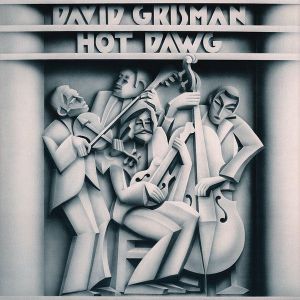

- David Grisman’s 1978 release finally returns to the site with STUNNING Nearly Triple Plus (A++ to A+++) sound throughout, just shy of our Shootout Winner – exceptionally quiet vinyl too
- These sides are clear and lively, with the all-important Tubey Magic that was missing from many of the copies we played
- Transparency, speed and freedom from smear are key to the best copies – this one showed us just how good the record can sound
- 4 1/2 stars: “Grisman’s lively ‘Dawg’s Bull’ and guitarist Tony Rice’s upbeat ‘Devlin’ set a high standard at the opening of the album, yet the remaining tracks continue to meet the high watermark of the first two songs.”
This vintage Horizon pressing has the kind of Tubey Magical Midrange that modern records rarely even BEGIN to reproduce. Folks, that sound is gone and it sure isn’t showing signs of coming back. If you love hearing INTO a recording, actually being able to “see” the performers, and feeling as if you are sitting in the studio with the band, this is the record for you. It’s what vintage all analog recordings are known for — this sound.
If you exclusively play modern repressings of vintage recordings, I can say without fear of contradiction that you have never heard this kind of sound on vinyl. Old records have it — not often, and certainly not always — but maybe one out of a hundred new records do, and those are some pretty long odds.
What The Best Sides Of Hot Dawg Have To Offer Is Not Hard To Hear
- The biggest, most immediate staging in the largest acoustic space
- The most Tubey Magic, without which you have almost nothing. CDs give you clean and clear. Only the best vintage vinyl pressings offer the kind of Tubey Magic that was on the tapes in 1978
- Tight, note-like, rich, full-bodied bass, with the correct amount of weight down low
- Natural tonality in the midrange — with all the instruments having the correct timbre
- Transparency and resolution, critical to hearing into the three-dimensional studio space
No doubt there’s more but we hope that should do for now. Playing the record is the only way to hear all of the qualities we discuss above, and playing the best pressings against a pile of other copies under rigorously controlled conditions is the only way to find a pressing that sounds as good as this one does.
Copies with rich lower mids and nice extension up top did the best in our shootout, assuming they weren’t veiled or smeary of course. So many things can go wrong on a record! We know, we’ve heard them all.
Top end extension is critical to the sound of the best copies. Lots of old records (and new ones) have no real top end; consequently, the studio or stage will be missing much of its natural air and space, and instruments will lack their full complement of harmonic information.
Tube smear is common to most vintage pressings and this is no exception. The copies that tend to do the best in a shootout will have the least (or none), yet are full-bodied, tubey and rich.
What We’re Listening For On Hot Dawg
- Energy for starters. What could be more important than the life of the music?
- The Big Sound comes next — wall to wall, lots of depth, huge space, three-dimensionality, all that sort of thing.
- Then transient information — fast, clear, sharp attacks, not the smear and thickness common to most LPs.
- Tight, note-like bass with clear fingering — which ties in with good transient information, as well as the issue of frequency extension further down.
- Next: transparency — the quality that allows you to hear deep into the soundfield, showing you the space and air around all the players.
- Extend the top and bottom and voila, you have The Real Thing — an honest to goodness Hot Stamper.
Vinyl Condition
Mint Minus Minus and maybe a bit better is about as quiet as any vintage pressing will play, and since only the right vintage pressings have any hope of sounding good on this album, that will most often be the playing condition of the copies we sell. (The copies that are even a bit noisier get listed on the site are seriously reduced prices or traded back in to the local record stores we shop at.)
Those of you looking for quiet vinyl will have to settle for the sound of later pressings and Heavy Vinyl reissues, purchased elsewhere of course as we have no interest in selling records that don’t have the vintage analog magic that is a key part of the appeal of these wonderful recordings.
If you want to make the trade-off between bad sound and quiet surfaces with whatever Heavy Vinyl pressing might be available, well, that’s certainly your prerogative, but we can’t imagine losing what’s good about this music — the size, the energy, the presence, the clarity, the weight — just to hear it with less background noise.
TRACK LISTING
Side One
Dawg’s Bull
Devlin
Minor Swing
Dawgology
Side Two
Neon Tetra
Janice
Dawg-Ola
16 . . . 16
AMG 4 1/2 Star Review
It’s no wonder that mandolinist David Grisman came up with the name “Dawg Music” to describe his style of playing, which draws from bluegrass, jazz, and many other forms of music.
This 1978 recording has long been a favorite of Grisman’s fans, as all of the compositions and performances have stood the test of time. Grisman’s lively “Dawg’s Bull” and guitarist Tony Rice’s upbeat “Devlin'” set a high standard at the opening of the album, yet the remaining tracks continue to meet the high watermark of the first two songs.
In addition to Rice’s presence throughout the recording, Grisman utilizes five different bassists (only one song, “Dawgology,” features two of them together), violinist Darol Anger, mandolinist Mike Marshall, and on two selections, the jazz violin master Stéphane Grappelli.