

More Ornette Coleman
More Five Star Albums Available Now

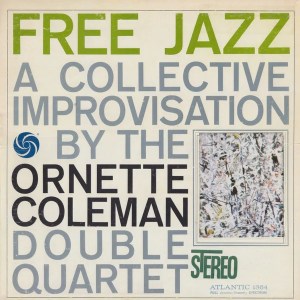
- We guarantee there is dramatically more richness, fullness, and performance energy on this copy than others you’ve heard, and that’s especially true if you made the mistake of buying whatever Heavy Vinyl pressing is currently on the market
- Tubier, more present, more alive, with more of that “jumpin’ right out of the speakers” quality that only The Real Thing (The Real Thing being an Old Record) ever has
- 5 stars: “As jazz’s first extended, continuous free improvisation LP, Free Jazz practically defies superlatives in its historical importance. . . Jazz had long prided itself on reflecting American freedom and democracy and, with Free Jazz, Coleman simply took those ideals to the next level. A staggering achievement.”
This vintage Atlantic pressing has the kind of Tubey Magical Midrange that modern records can barely BEGIN to reproduce. Folks, that sound is gone and it sure isn’t showing signs of coming back. If you love hearing INTO a recording, actually being able to “see” the performers, and feeling as if you are sitting in the studio with the band, this is the record for you. It’s what vintage all analog recordings are known for — this sound.
If you exclusively play modern repressings of vintage recordings, I can say without fear of contradiction that you have never heard this kind of sound on vinyl. Old records have it — not often, and certainly not always — but maybe one out of a hundred new records do, and those are some pretty long odds.
What the Best Sides of Free Jazz Have to Offer Is Not Hard to Hear
- The biggest, most immediate staging in the largest acoustic space
- The most Tubey Magic, without which you have almost nothing. CDs give you clean and clear. Only the best vintage vinyl pressings offer the kind of Tubey Magic that was on the tapes in 1961
- Tight, note-like, rich, full-bodied bass, with the correct amount of weight down low
- Natural tonality in the midrange — with all the instruments having the correct timbre
- Transparency and resolution, critical to hearing into the three-dimensional studio space
No doubt there’s more but we hope that should do for now. Playing the record is the only way to hear all of the qualities we discuss above, and playing the best pressings against a pile of other copies under rigorously controlled conditions is the only way to find a pressing that sounds as good as this one does.
Copies with rich lower mids and nice extension up top did the best in our shootout, assuming they weren’t veiled or smeary of course. So many things can go wrong on a record! We know, we’ve heard them all.
Top end extension is critical to the sound of the best copies. Lots of old records (and new ones) have no real top end; consequently, the studio or stage will be missing much of its natural air and space, and instruments will lack their full complement of harmonic information.
Tube smear is common to most vintage pressings and this is no exception. The copies that tend to do the best in a shootout will have the least (or none), yet are full-bodied, tubey and rich.
What We’re Listening For on Free Jazz
- Energy for starters. What could be more important than the life of the music?
- The Big Sound comes next — wall to wall, lots of depth, huge space, three-dimensionality, all that sort of thing.
- Then transient information — fast, clear, sharp attacks, not the smear and thickness so common to these LPs.
- Tight punchy bass — which ties in with good transient information, also the issue of frequency extension further down.
- Next: transparency — the quality that allows you to hear deep into the soundfield, showing you the space and air around all the instruments.
- Extend the top and bottom and voila, you have The Real Thing — an honest to goodness Hot Stamper.
The Players
- Ornette Coleman – alto saxophone
- Don Cherry – pocket trumpet
- Scott LaFaro – bass
- Billy Higgins – drums
- Eric Dolphy – bass clarinet
- Freddie Hubbard – trumpet
- Charlie Haden – bass
- Ed Blackwell – drums
TRACK LISTING
Side One
Free Jazz (Part 1)
Side Two
Free Jazz (Part 2)
AMG 5 Star Rave Review
As jazz’s first extended, continuous free improvisation LP, Free Jazz practically defies superlatives in its historical importance. Ornette Coleman’s music had already been tagged “free,” but this album took the term to a whole new level. Aside from a predetermined order of featured soloists and several brief transition signals cued by Coleman, the entire piece was created spontaneously, right on the spot.
The lineup was expanded to a double-quartet format, split into one quartet for each stereo channel: Ornette, trumpeter Don Cherry, bassist Scott LaFaro, and drummer Billy Higgins on the left; trumpeter Freddie Hubbard, bass clarinetist Eric Dolphy, bassist Charlie Haden, and drummer Ed Blackwell on the right. The rhythm sections all play at once, anchoring the whole improvisation with a steady, driving pulse. The six spotlight sections feature each horn in turn, plus a bass duet and drum duet; the “soloists” are really leading dialogues, where the other instruments are free to support, push, or punctuate the featured player’s lines. Since there was no road map for this kind of recording, each player simply brought his already established style to the table. That means there are still elements of convention and melody in the individual voices, which makes Free Jazz far more accessible than the efforts that followed once more of the jazz world caught up.
Still, the album was enormously controversial in its bare-bones structure and lack of repeated themes. Despite resembling the abstract painting on the cover, it wasn’t quite as radical as it seemed; the concept of collective improvisation actually had deep roots in jazz history, going all the way back to the freewheeling early Dixieland ensembles of New Orleans. Jazz had long prided itself on reflecting American freedom and democracy and, with Free Jazz, Coleman simply took those ideals to the next level. A staggering achievement.