

More Cannonball Adderley
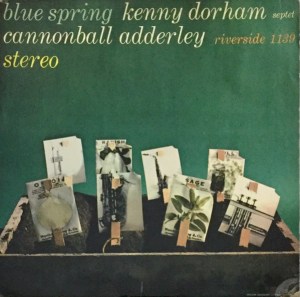

- Dorham and Adderley’s 1959 collaboration finally arrives on the site with Shootout Winning Triple Plus (A+++) sound on side two with an outstanding Double Plus (A++) side one
- This superb recording is huge and lively with startling dynamics and in-the-room-presence like nothing you’ve heard
- The trumpet and saxophone are so full-bodied and Tubey Magical you won’t believe it – where is that sound today?
- 4 stars: “The set features plenty of Dorham’s varied and sophisticated horn work and four of his top-drawer originals. The theme is spring… Essential listening for Dorham fans.”
To find a clean, 1959 Riverside pressing on the early Blue Label with vinyl any quieter and no groove damage whatsoever strikes us as practically impossible. This is the first pressing in audiophile playing quality we have ever seen, and we may never see its like again.
Jack Higgins was the engineer for these sessions. He recorded Chet Baker’s brilliant Chet album the same year, as well as another favorite of ours here at Better Records, Wynton Kelly’s wonderful (and very good sounding on ’80s OJC) Kelly Blue.
This vintage LP has the kind of Tubey Magical Midrange that modern records rarely even BEGIN to reproduce. Folks, that sound is gone and it sure isn’t showing signs of coming back. If you love hearing INTO a recording, actually being able to “see” the performers, and feeling as if you are sitting in the studio with the band, this is the record for you. It’s what vintage all analog recordings are known for — this sound.
If you exclusively play modern repressings of vintage recordings, I can say without fear of contradiction that you have never heard this kind of sound on vinyl. Old records have it — not often, and certainly not always — but maybe one out of a hundred new records do, and those are some pretty long odds.
What the best sides of Blue Spring have to offer is not hard to hear:
- The biggest, most immediate staging in the largest acoustic space
- The most Tubey Magic, without which you have almost nothing. CDs give you clean and clear. Only the best vintage vinyl pressings offer the kind of Tubey Magic that was on the tapes in 1959
- Tight, note-like, rich, full-bodied bass, with the correct amount of weight down low
- Natural tonality in the midrange — with all the instruments having the correct timbre
- Transparency and resolution, critical to hearing into the three-dimensional space of the studio
No doubt there’s more but we hope that should do for now. Playing the record is the only way to hear all of the qualities we discuss above, and playing the best pressings against a pile of other copies under rigorously controlled conditions is the only way to find a pressing that sounds as good as this one does.
Copies with rich lower mids and nice extension up top did the best in our shootout, assuming they weren’t veiled or smeary of course. So many things can go wrong on a record! We know, we’ve heard them all.
Top end extension is critical to the sound of the best copies. Lots of old records (and new ones) have no real top end; consequently, the studio or stage will be missing much of its natural air and space, and instruments will lack their full complement of harmonic information.
Tube smear is common to most vintage pressings and this is no exception. The copies that tend to do the best in a shootout will have the least (or none), yet are full-bodied, tubey and rich.
What We’re Listening For on Blue Spring
- Energy for starters. What could be more important than the life of the music?
- The Big Sound comes next — wall to wall, lots of depth, huge space, three-dimensionality, all that sort of thing.
- Then transient information — fast, clear, sharp attacks, not the smear and thickness common to most LPs.
- Tight, note-like bass with clear fingering — which ties in with good transient information, as well as the issue of frequency extension further down.
- Next: transparency — the quality that allows you to hear deep into the soundfield, showing you the space and air around all the players.
- Then: presence and immediacy. The saxophone and trumpet aren’t “back there” somewhere, way behind the speakers. They’re front and center where any recording engineer worth his salt — Jack Higgins in this case — would have put them.
- Extend the top and bottom and voila, you have The Real Thing — an honest to goodness Hot Stamper.
The Players
Kenny Dorham – trumpet
Cannonball Adderley – alto saxophone
David Amram – French horn
Cecil Payne – baritone saxophone
Cedar Walton – piano
Paul Chambers – bass
Jimmy Cobb – drums
Philly Joe Jones – drums
Side One
Blue Spring
It Might As Well Be Spring
Poetic
Side Two
Spring Is Here
Spring Cannon
Passion Spring
AMG 4 Star Review
In lieu of picking up one of the trumpeter’s fine Blue Note releases (Una Mas, Whistle Stop), listeners new to the work of Kenny Dorham should definitely consider this somewhat overlooked Riverside date from 1959. The set features plenty of Dorham’s varied and sophisticated horn work and four of his top-drawer originals. The theme is spring, and Dorham responds with his soon to be jazz standard “Spring Is Here” and three other fine seasonal tributes: the title track, “Poetic Spring,” and “Spring Cannon.” This last cut is also a tribute to Julian “Cannonball” Adderley, who guests in fine style here with a bevy of fleet and highly melodic solos. Rounding out the group, baritone saxophonist Cecil Payne, French horn player David Amram, and pianist Cedar Walton add very nicely to the album’s breezy yet provocative air. Essential listening for Dorham fans.