

More Jazz Recordings of Interest

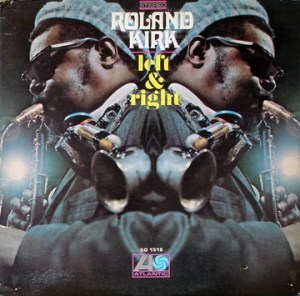
- Left & Right appears on the site for only the second time ever, here with an INCREDIBLE Shootout Winning Triple Plus (A+++) side one mated to a solid Double Plus (A++) side two – fairly quiet vinyl too
- Rich, solid bass; you-are-there immediacy; energy and drive; instruments that are positively jumping out of the speakers – add it all up and you can see that this copy had the sound we were looking for
- 4 1/2 stars: “…extremely brilliant and thoroughly accessible.”
This vintage Atlantic pressing has the kind of Tubey Magical Midrange that modern records can barely BEGIN to reproduce. Folks, that sound is gone and it sure isn’t showing signs of coming back. If you love hearing INTO a recording, actually being able to “see” the performers, and feeling as if you are sitting in the studio with the band, this is the record for you. It’s what vintage all analog recordings are known for — this sound.
If you exclusively play modern repressings of vintage recordings, I can say without fear of contradiction that you have never heard this kind of sound on vinyl. Old records have it — not often, and certainly not always — but maybe one out of a hundred new records do, and those are some pretty long odds.
What the Best Sides of Left & Right Have to Offer Is Not Hard to Hear
- The biggest, most immediate staging in the largest acoustic space
- The most Tubey Magic, without which you have almost nothing. CDs give you clean and clear. Only the best vintage vinyl pressings offer the kind of Tubey Magic that was on the tapes in 1969
- Tight, note-like, rich, full-bodied bass, with the correct amount of weight down low
- Natural tonality in the midrange — with all the instruments having the correct timbre
- Transparency and resolution, critical to hearing into the three-dimensional studio space
No doubt there’s more but we hope that should do for now. Playing the record is the only way to hear all of the qualities we discuss above, and playing the best pressings against a pile of other copies under rigorously controlled conditions is the only way to find a pressing that sounds as good as this one does.
Copies with rich lower mids and nice extension up top did the best in our shootout, assuming they weren’t veiled or smeary of course. So many things can go wrong on a record. We know, we’ve heard them all.
Top end extension is critical to the sound of the best copies. Lots of old records (and new ones) have no real top end; consequently, the studio or stage will be missing much of its natural air and space, and instruments will lack their full complement of harmonic information.
Tube smear is common to most vintage pressings. The copies that tend to do the best in a shootout will have the least (or none), yet are full-bodied, tubey and rich.
Learning the Record
For our shootout, we had at our disposal a variety of pressings that had the potential for Hot Stamper sound. We cleaned them carefully, then unplugged everything in the house we could, warmed up the system, Talisman’d it, found the right VTA for our Triplanar arm (by ear of course) and proceeded to spend the next hour or so playing copy after copy on side one, after which we repeated the process for side two.
If you have five or more copies of a record and play them over and over against each other, the process itself teaches you what’s right and what’s wrong with the sound of the album. Once your ears are completely tuned to what the best pressings do well that the other pressings do not do as well, using a few carefully chosen passages of music, it quickly becomes obvious how well a given copy can reproduce those passages. You’ll hear what’s better and worse — right and wrong would be another way of putting it — about the sound.
This approach is simplicity itself. First, you go deep into the sound. There you find a critically important passage in the music, one which most copies struggle — or fail — to reproduce as well as the best. Now, with the hard-won knowledge of precisely what to listen for, you are perfectly positioned to critique any and all pressings that come your way.
It may be a lot of work but it sure ain’t rocket science, and we’ve never pretended otherwise. Just the opposite: from day one we’ve explained step by step precisely how to go about finding the Hot Stampers in your own collection. Not the good sounding pressings you happen to own — those may or may not have Hot Stampers — but the records you actually cleaned, shot out, and declared victorious.
What We’re Listening For On Left & Right
- Energy for starters. What could be more important than the life of the music?
- The Big Sound comes next — wall to wall, lots of depth, huge space, three-dimensionality, all that sort of thing.
- Then transient information — fast, clear, sharp attacks, not the smear and thickness so common to these LPs.
- Tight, full-bodied bass — which ties in with good transient information, also the issue of frequency extension further down.
- Next: transparency — the quality that allows you to hear deep into the soundfield, showing you the space and air around all the instruments.
- Extend the top and bottom and voila, you have The Real Thing — an honest to goodness Hot Stamper.
Side One
Black Mystery Has Been Revealed
Expansions
Kirkquess
Kingus Mingus
Celestialness
A Dream Of Beauty Reincarnated
Frisco Vibrations
Classical Jazzical
Ellington Psalms
Hayne’s Brain’s Sayin’s
What’s Next – Overture
Side Two
Lady’s Blues
IX Love
Hot Cha
Quintessence
I Waited For You
A Flower Is A Lovesome Thing
AMG 4 1/2 Star Review
The title of this album, Left and Right, no doubt refers to the sides of Rahsaan Roland Kirk’s brain, which were both heavily taxed in the composing, arranging, conducting, and playing of this recording. For starters, the band is huge — 17 players plus a 16-piece string section, all of it arranged and conducted by Kirk, a blind man. None of this would matter a damn if this weren’t such a badass platter.
Along with Kirk’s usual crew of Ron Burton, Julius Watkins, Dick Griffin, Jimmy Hopps, and Gerald Brown, there are luminaries in the crowd including Alice Coltrane on harp, Pepper Adams on baritone saxophone, and no less than Roy Haynes helping out on the skins. What it all means is this: The man who surprised and outraged everybody on the scene — as well as blew most away — was at it again here in “Expansions,” his wildly ambitious and swinging post-Coltrane suite, which has “Black Mystery Has Been Revealed” as its prelude. While there are other tracks on this record, this suite is its centerpiece and masterpiece — despite killer readings of Billy Strayhorn’s “A Flower Is a Lovesome Thing” and “Quintessence.”
“Expansions” has Kirk putting his entire harmonic range on display, and all of the timbral extensions he used in his own playing are charted for a string section to articulate. There are subtleties, of course, which come off as merely tonal variations in extant harmony with the other instruments, but when they are juxtaposed against a portrayal of the entire history of jazz — from Jelly Roll Morton to the present day — then they become something else: the storytellers, the timbres, and the chromatic extensions that point in the right direction and get listeners to stop in the right places. This is an extreme for Rahsaan — extremely brilliant and thoroughly accessible.