

More of the Music of The Grateful Dead
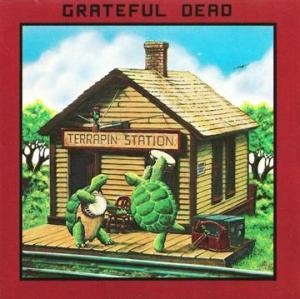

- With solid Double Plus (A++) grades from start to finish, we guarantee you’ve never heard Terrapin Station sound this good – remarkably quiet vinyl too
- Produced by Keith Olsen of Fleetwood Mac fame, it’s no surprise that the recording quality is quite a bit better than most of the records the band had been making at the time
- “Terrapin Station offers a few choice glimpses of the band doing what it does best. While the most prominent example is the album’s extended title suite, there are a few others such as the cover of the Rev. Gary Davis gospel-blues ‘Samson and Delilah’ and a resurrection of the Martha & the Vandellas hit ‘Dancin’ in the Streets.'”
Most Dead studio albums after Workingman’s Dead are full of filler, but this one actually has some good songs: the extended title song suite, the hard-rockin’ “Passenger,” and “Estimated Prophet.” The cover (note the similarities to Fleetwood Mac’s Station Man) and the darkly funky “Dancin’ In The Streets” may have earned this album the epithet of Disco Dead, but it’s actually a good bit of fun if you don’t take it too seriously.
Terrapin Station marked the Dead’s return to a major label (Arista) and was only their second album ever to make use of an outside producer (Keith Olsen, who also worked on the two smash hit Fleetwood Mac albums of the era — Rumours and the self-titled LP, two records that can sound stunning on the right pressing). As such, the songs are a bit more concise than you might expect from these crazy guys — only the title song goes over five and a half minutes, and it’s one of the band’s most famous jams!
What To Listen For
Most copies have a severe lack of top end extension, but this one actually sounds pretty nice up there. If you like the sound of Little Feat’s albums, you can expect similar qualities from this record.
What The Best Sides Of Terrapin Station Have To Offer Is Not Hard To Hear
- The biggest, most immediate staging in the largest acoustic space
- The most Tubey Magic, without which you have almost nothing. CDs give you clean and clear. Only the best vintage vinyl pressings offer the kind of Tubey Magic that was on the tapes in 1977
- Tight, note-like, rich, full-bodied bass, with the correct amount of weight down low
- Natural tonality in the midrange — with all the instruments having the correct timbre
- Transparency and resolution, critical to hearing into the three-dimensional studio space
No doubt there’s more but we hope that should do for now. Playing the record is the only way to hear all of the qualities we discuss above, and playing the best pressings against a pile of other copies under rigorously controlled conditions is the only way to find a pressing that sounds as good as this one does.
What We’re Listening For On Terrapin Station
- Energy for starters. What could be more important than the life of the music?
- Then: presence and immediacy. The vocals aren’t “back there” somewhere, lost in the mix. They’re front and center where any recording engineer worth his salt would put them.
- The Big Sound comes next — wall to wall, lots of depth, huge space, three-dimensionality, all that sort of thing.
- Then transient information — fast, clear, sharp attacks, not the smear and thickness so common to most LPs.
- Tight punchy bass — which ties in with good transient information, also the issue of frequency extension further down.
- Next: transparency — the quality that allows you to hear deep into the soundfield, showing you the space and air around all the instruments.
- Extend the top and bottom and voila, you have The Real Thing — an honest to goodness Hot Stamper.
Side One
Estimated Prophet
Dancing in the Street
Passenger
Samson and Delilah
Sunrise
Side Two
Terrapin Station (suite):
Lady With a Fan
Terrapin Station
Terrapin
Terrapin Transit
At a Siding
Terrapin Flyer Refrain
AMG Review
Musically, Terrapin Station offers a few choice glimpses of the band doing what it does best. While the most prominent example is the album’s extended title suite, there are a few others such as the cover of the Rev. Gary Davis gospel-blues “Samson and Delilah” and a resurrection of the Martha & the Vandellas hit “Dancin’ in the Streets.” The latter tune was originally performed by the Dead in their mid-’60s repertoire.