

More of the music of Peter Ilyich Tchaikovsky (1840-1893)
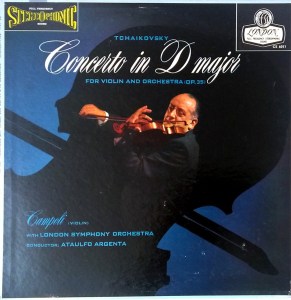

- Another Blockbuster classical recording comes to the site – a rare and amazing Blueback pressing with both sides earning Shootout Winning Triple Plus (A+++) grades
- One of the best sounding copies of the work we have ever played – the orchestra is big, rich and tubey, yet the dynamics and transparency are first rate
- The violin here is superb, as good as we’ve heard — rich, smooth, clear, resolving
- What sets the truly killer pressings apart is the depth, width and three-dimensional quality of the sound
The violin here is superb, as good as we heard — rich, smooth, clear, resolving. What sets the truly killer pressings apart is the depth, width and three-dimensional quality of the sound. The Tubey Magical richness is to die for. Big space, a solid bottom, and plenty of dynamic energy are strongly in evidence throughout. Practically zero smear, maximum resolution and transparency, tremendous dynamics, a violin that is present and solid — this pressing took the sound of this recording beyond what we thought was possible.
Quick Notes for Side One
Richer and smoother when loud. Tubey and sweet. Loud passages are huge, yet clear, with no smear. HTF (Hard To Fault).
Quick Notes for Side Two
Amazing rosiny violin. 100% transparent yet so rich and tubey. Performance is tops. Deep bass too.
What Shootout Winning sides such as these have to offer is not hard to hear:
- The biggest, most immediate staging in the largest acoustic space
- The most Tubey Magic, without which you have almost nothing. CDs give you clean and clear. Only the best vintage vinyl pressings offer the kind of Tubey Magic that was on the tapes in 1958
- Tight, note-like, rich, full-bodied bass, with the correct amount of weight down low
- Natural tonality in the midrange — with all the instruments having the correct timbre
- Transparency and resolution, critical to hearing into the three-dimensional studio space
No doubt there’s more but we hope that should do for now. Playing the record is the only way to hear all of the qualities we discuss above, and playing the best pressings against a pile of other copies under rigorously controlled conditions is the only way to find a pressing that sounds as good as this one does.
What We Listen For on Concerto for Violin & Orchestra
- Energy for starters. What could be more important than the life of the music?
- The Big Sound comes next — wall to wall, lots of depth, huge space, three-dimensionality, all that sort of thing.
- Then transient information — fast, clear, sharp attacks, not the smear and thickness so common to these LPs.
- Note-like bass — which ties in with good transient information, also the issue of frequency extension further down.
- Next: transparency — the quality that allows you to hear deep into the soundfield, showing you the space and air around all the instruments.
- Extend the top and bottom and voila, you have The Real Thing — an honest to goodness Hot Stamper.
The Concerto
So prodigal is Tchaikovsky’s melodic inspiration that he can afford to begin the sonata-form opening movement with a lovely little theme for orchestral violins and then — just as he did at the beginning of his First Piano Concerto — never play it again. The orchestra next hints at the big theme to come and provides anticipatory excitement for the soloist.
After a brief warm-up stretch, he launches one of Tchaikovsky’s most inspired themes, and one with multiple personalities. At first, it is gentle, even wistful, but when the orchestra takes it up a few minutes later, it becomes very grand: music for an Imperial Russian ball.
Later still in the development section, the soloist transforms it again with an intricately ornamented, double-stopped variation. The violin’s second theme, begun in its warm lower register, retains its wistful nature. Much later in the poignant recapitulation section, the principal theme is beautifully adopted by the solo flute.
The exquisite second-movement “Canzonetta” (“little song”) in G minor — Tchaikovsky’s one-day miracle — blends the melancholy colors of woodwinds with the violin. Tchaikovsky scholar David Brown suggests it reflects the composer’s homesickness during his self-imposed exile from Russia. Rather than ending, it rises on a two-note sighing motive and then explodes into the Allegro vivacissimo finale.
In this hearty rondo inspired by Russian folk dance, Tchaikovsky finally lets the soloist fly. He alternates two contrasting themes: the first a high-spirited scamper; the second a slower, downward-drooping melody that shows off the violin’s earthy low register and also features a nostalgic dialogue with woodwind solos. At the close, the dance keeps accelerating to a breathless finish.
Baltimore Symphony Orchestra website