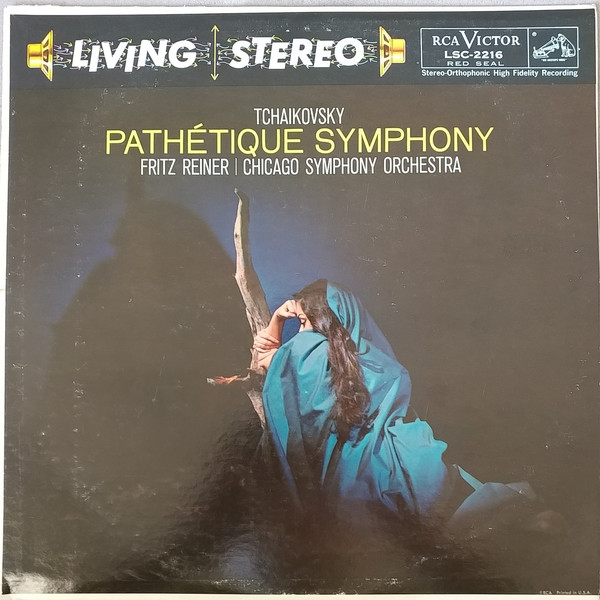
RCA Released this Awful Living Stereo Recording in 1958

Hot Stamper Pressings of the Music of Tchaikovsky Available Now

Some audiophiles buy albums based on their labels. For example, this pressing from the Golden Age of Living Stereo might appeal to a certain kind of audiophile who treasures LSC’s with the original Shaded Dog label.

More than that, he might limit himself to 1S Indianapolis pressings. Hoorah! What could be better?

However, many records from this era simply do not sound good, and this is one of them. We have never heard a good sounding copy of LSC 2216, and we’ve played quite a number of them over the decades we’ve been in the business of selling Golden Age classical records.

A copy came in just last week so I figured it was time to give it a spin and see if there was any reason to change my opinion. Hey, maybe this one had Hot Stampers! Can’t say it wouldn’t be possible. Unlikely, yes, impossible, no.

So here’s what I heard. No real top above 6k, hardly any bottom, dry and thin, but with a very wide stage – the textbook definition of “boxy sound.”

If you are a fan of Living Stereo pressings, have you noticed that many of them – this one for example – don’t sound good?

If you’re an audiophile with good equipment, you should have. But did you? Or did you buy into the hype surrounding these rare LSC pressings and just ignore the problems with the sound?

(more…)

The Really Big Questions Rarely Have Good Answers

More Entries from Tom’s Audiophile Notebook

On this blog we have a section devoted to a great many questions that often come up when audiophiles are thinking about records.

By clicking on the link above, you will find, among other subjects, discussions of the “working knowledge” some collectors use to identify what they believe to be pressings with superior sound.

To be sure, these are some very important questions, which, judging by what I read on the web, many audiophiles think they have the answers to.

Before we go any farther, we should make our position on these questions clear to our readers.

We’re really not that interested in big questions, mostly because there aren’t any big answers for them.

When it comes to records, being able to reveal deep underlying truths about a wide range of vinyl pressings is simply not possible. To be honest, we don’t think it can be done.

Knowledge

It’s not that we don’t have plenty of working knowledge. It’s that we have so much of it that we needed a blog to hold it all so that we could share it with others.

No, our working knowledge is made up of lots of little bits of data that guide us in discovering the best sounding pressings for the individual titles we choose to play.

It would be nice to have general rules to help us in our search for better sound on vinyl, but our experience tells us that general rules are so unreliable that they fail to function as rules at all.

(more…)

Is Music Poorly Reproduced More Like Noise or More Like Music?

Robert Brook runs a blog called The Broken Record, with a subtitle explaining that the aim of his blog is to serve as:

A GUIDE FOR THE DEDICATED ANALOG AUDIOPHILE

We know of none better, outside of our own humble attempt to enlighten that portion of the audiophile community who love records and are looking to understand them better.

Here is one of Robert’s more recent postings you may find of interest.

The ART OF NOISE at SFMOMA: Where is the MUSIC?


More on Robert’s system here. You may notice that it has a lot in common with the one we use. This is clearly not an accident.

And it is also no accident that these two systems just happen to be very good at showing their owners the manifold shortcomings of the modern remastered LP, as well as the benefits to be gained by doing shootouts in order to find dramatically better sounding pressings to play.

(more…)

James Taylor – Self-Titled

More James Taylor

More Debut Recordings of Interest

  • This early UK Apple pressing of James Taylor’s debut LP boasts excellent sound from first note to last
  • We do this shootout about once every ten years, so if you are James Taylor fan, this may be your last chance to get a killer copy of this album in audiophile playing condition from us
  • If I were to make a list of my favorite rock and pop albums from 1968, this album would definitely be on it
  • 4 1/2 stars: “The absolute conviction that runs throughout this music takes the listener into its confidence and with equal measures of wit, candor, and sophistication, James Taylor created a minor masterpiece…”
  • We’ve recently compiled a list of records we think every audiophile should get to know better, along the lines of “the 1001 records you need to hear before you die,” with an accent on the joy these amazing audiophile-quality recordings can bring to your life.
  • James Taylor’s first album is a good example of a record audiophiles probably don’t know well, but we think they might really enjoy getting to know it better

(more…)

Paul Simon – There Goes Rhymin’ Simon

More Paul Simon

More Rock and Pop


  • A vintage Columbia stereo pressing of Simon’s third solo album with solid Double Plus (A++) grades or close to them on both sides
  • The sound is big, warm and full-bodied (particularly on side two) – it’s much more present and clear, and not nearly as harsh or gritty as far too many of the copies we played were
  • Great songs including “Kodachrome,” “Loves Me Like a Rock,” “Was a Sunny Day” (and you probably know most of the other 7)
  • 5 stars: “Retaining the buoyant musical feel of Paul Simon, but employing a more produced sound, There Goes Rhymin’ Simon found Paul Simon writing and performing with assurance and venturing into soulful and R&B-oriented music.”
  • If you’re a Paul Simon fan, this has to be considered a Must Own Title of his from 1973.
  • The complete list of titles from 1973 that we’ve reviewed to date can be found here.

Most pressings don’t have anywhere near this kind of openness and transparency — and they don’t have this kind of richness or warmth either. It’s a real treat to hear these great songs finally get the sound they deserve.

On most pressings, Simon’s voice is a spitty, gritty mess — sure it’s present, but where is the sweetness and warmth?

Well, as a copy like this proves, more of those qualities made it to the tape than you might think

(more…)

Look Around, Then Listen for the Huge Room on Roda

Basic Audio Advice — These Are the Fundamentals of Good Sound

If you have a good copy of Look Around and a high-rez stereo/room and want to have some fun, play the second track on side one, Roda. In the left channel there is some double-tracked clapping (or two people, how could you tell the difference?) in a HUGE room. Actually, although it may sound like a huge room, it’s probably a normal-sized room with lots of reverb added to the recording.

Either way it sounds awesome. 

These hand claps drive the energy and rhythm of the song, and they are so well recorded you will think the back wall of your listening room just collapsed behind the left speaker. On the truly transparent copies the echo goes WAY back.

(Note that it can also be heard in the center of the soundfield and off to the right as well, but, of course, those effects can only be heard on the best copies, on the best equipment, in the best rooms.)

Without a doubt it was the most fun sound we heard in a full day of shootouts.

The typical copy of the album won’t show you how big that room is.

The long out of print Speakers Corner heavy vinyl pressing won’t either. Their version is okay, not bad, but by no stretch of the imagination competitive with any Hot Stamper pressing.

The typical audiophile stereo will also have a hard time reproducing the huge room in which those hand claps can so clearly be heard. You will need to have all the latest stuff, a very good front end and a very fast cartridge to get the sound of that room to come out of your speakers.

Most pressings of this album are grainy, shrill, thin, veiled, smeary and full of compressor distortion in the louder parts. This is not a recipe for audiophile listening pleasure.

Room Treatments Bring Out The Best

(more…)

Foreigner – 4

More Foreigner

  • Superb sound for this radio rock classic, with both sides earning solid Double Plus (A++) grades or BETTER
  • Side one was sonically very close to our Shootout Winner – you will be shocked at how big and powerful the sound is
  • It’s the impossibly rare copy that’s this lively, solid and rich… drop the needle on any track and you’ll see what we mean
  • Rockers like “Juke Box Hero” and “Urgent,” along with the heartfelt ballad “Waiting For A Girl Like You,” are guaranteed to sound better than you ever imagined or your money back
  • 4 1/2 stars: “In producer Robert John “Mutt” Lange – fresh off his massive success with AC/DC’s Back in Black – guitarist and all-around mastermind Mick Jones found both the catalyst to achieve [a grand slam of a record] and his perfect musical soulmate… All things considered, 4 remains Foreigner’s career peak.”

What’s key to the sound of Foreigner’s records?

Obviously, the big one would have to be ENERGY, a subject we discuss at length on our blog. Next would be punchy ROCK BASS, followed by clear, present vocals.

Those are the big ones, and we are happy to report that this copy had the best Foreigner sound in all three areas.

Problem Areas

Number one: Too many instruments jammed into too little space in the upper midrange. When the tonality is shifted-up, even slightly, or there is too much compression, there will be too many elements — voices, guitars, drums — vying for space in the upper area of the midrange, causing congestion and a loss of clarity.

With the more solid sounding copies, the lower mids are full and rich; above them, the next “level up” so to speak, there’s plenty of space in which to fit all the instruments comfortably, not piling them one on top of another as is so often the case. Consequently, the upper midrange area does not get stuffed and overwhelmed with musical information.

Number Two: edgy vocals, which is related to Number One above. Almost all copies have at least some edge to the vocals — the band seems to want to really belt it out in the multi-tracked choruses — but the best copies keep the edge under control, without sounding compressed, dark, dull or smeary.

(more…)

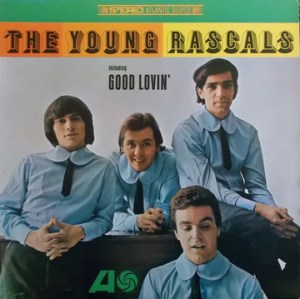
The Young Rascals – Self-Titled

More of The Young Rascals 

More Rock and Pop

  • The Young Rascals’ self-titled debut LP hits the site with excellent grades from start to finish
  • We chanced upon an amazing sounding stereo original about ten years ago, and only ten years later (!) we finally had enough clean copies to do a proper shootout
  • We often say that the average copy of Album X is no great shakes — here’s a title where almost no copies sound good and the average pressing is awful
  • Big, rich, energetic, with tons of analog Tubey Magic, this blue and green Atlantic stereo pressing has exactly the right sound for this music
  • 4 1/2 stars: “The Young Rascals is that rare example of a genuinely great album that got heard and played, and sold and sold. [It] couples a raw garage band sound with compelling white soul more successfully than just about any record since the Beatles’ Please Please Me.”

(more…)

This Is Why We Love Pablo in the 70s

Hot Stamper Pressings of Pablo Recordings Available Now

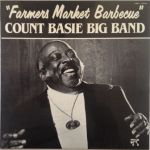
For years we have been including the followinig commentary in our Hot Stamper listings for Farmers Market Barbecue:

Musically FMB is a top Basie big band title in every way. This should not be surprising: many of his recordings for Pablo in the 70s and early 80s display the talents of The Count and his band at their best.

Sonically there’s more to the story. Based on our recent shootout for this title, in comparison to the other Basie titles we’ve done lately, we would have to say that FMB is the best Basie big band title we’ve ever played.

Since so many Basie big band recordings are so good, we don’t want to get ahead of ourselves; after all, we haven’t done shootouts for all of Basie’s Pablo large group recordings. To be safe we’ll just call this one first among equals.

Having recently done another shootout, our first in two and a half years, we would have to say that the album still sounds every bit as amazing as we thought it did when we wrote the above comments more than fifteen years ago.

Our notes for a shootout winning copy get right to the heart of what makes the recording so special.

For those who might have trouble reading our scratch, allow me to transcribe what Riley, our main listening guy, heard and noted as he played the two sides of this copy.

(more…)

The Rolling Stones – Beggars Banquet

More Rolling Stones

  • You’ll find solid Double Plus (A++) sound on both sides of this vintage London pressing of this surprisingly well-recorded Stones album from 1968
  • The long lost Tubey Magic of these early pressings has them sounding better than we ever thought possible using the audio equipment of the 60s
  • This is exactly the way you want Beggars Banquet to sound, and it sure doesn’t take a pair of golden ears to hear it
  • One of a select group of Rolling Stones Must Own titles we prize above all others – Sticky Fingers and Let It Bleed round out the trio
  • 5 stars: “Basic rock & roll was not forgotten, however: ‘Street Fighting Man’… was one of their most innovative singles, and ‘Sympathy for the Devil’… was an image-defining epic.”
  • If you’re a Stones fan, this vintage pressing of their 1968 classic belongs in your collection
  • No Expectations, the second song on the first side, is one of the greatest Demo Tracks for Tubey Magical guitar reproduction we know of. The next year, Glyn Johns would pull off another acoustic guitar recording of that quality with Love in Vain on Let It Bleed.

Good pressings are certainly not easy to come by — this kind of rich, full-bodied, musical sound is the exception, not the rule. And there’s actual space and extension up top as well, something you certainly won’t hear on most of the vinyl that’s been pressed over the 50+ years since this album was released.

What sets the best copies apart from the pack is a fuller, richer tonal balance, which is achieved mostly by having plenty of bass and less upper midrange. Those are the copies that sound tonally correct to us, and you should have no trouble appreciating the difference.

(more…)